

Starting a cloud kitchen in India has become an attractive way to enter the food business without investing in a traditional dine-in restaurant.
A cloud kitchen—also called a ghost kitchen, virtual kitchen or delivery-only kitchen—primarily prepares food for takeaway and online delivery. Orders may come through food delivery platforms, a business’s own website, social media, WhatsApp or direct ordering channels.
But before you start selling food, there is an important question:
What licenses are required to start a cloud kitchen in India?
From FSSAI registration or licensing to GST and local business permissions, the requirements can vary depending on your turnover, business structure, location and operations.
This beginner-friendly guide explains the major cloud kitchen licenses and registrations in India in 2026 and how to get your business ready to start accepting orders.
What is a Cloud Kitchen?
A cloud kitchen is a food business that prepares meals primarily for delivery or takeaway instead of dine-in service.
Unlike a conventional restaurant, a cloud kitchen may operate without:
- Customer seating
- Expensive interiors
- Waiters
- Prime high-street frontage
- Large dining areas
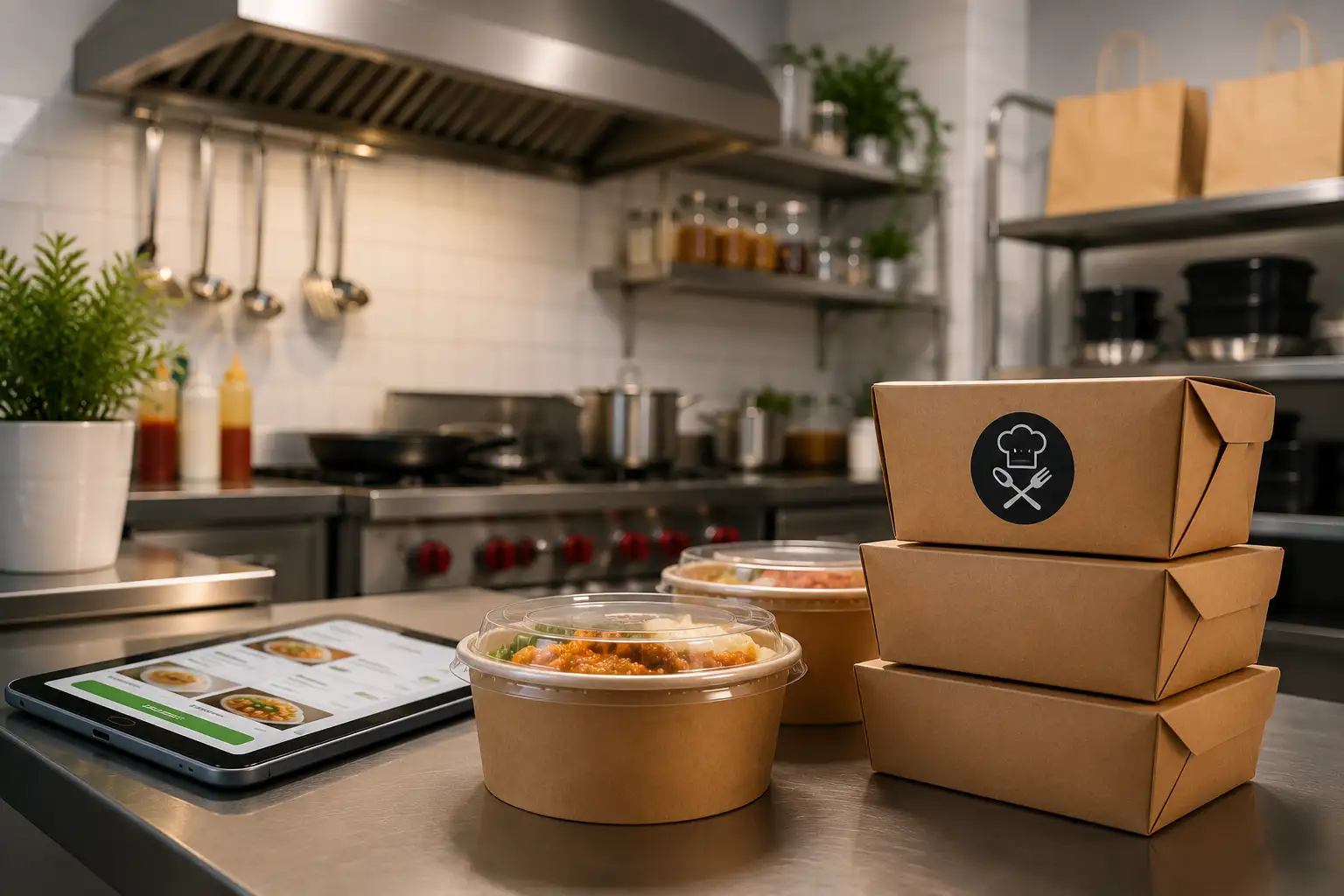
Instead, the focus is on the kitchen, food preparation, packaging, online ordering and delivery.
A single cloud kitchen may even operate multiple food brands from the same premises, subject to applicable licensing and compliance requirements.
For example, one kitchen could potentially operate separate online brands for:
North Indian Food | Biryani | Healthy Meals | Chinese Food | Desserts
This business model can allow entrepreneurs to test different food concepts while keeping infrastructure costs relatively controlled.
Licenses Required for a Cloud Kitchen in India
There is no single universal “cloud kitchen licence” that covers every requirement.
Instead, your business may need a combination of registrations and licences depending on its activities and location.
Some of the most important ones to consider are:
1. FSSAI Registration or Licence
2. GST Registration, where applicable
3. Local Trade/Shop & Establishment Permissions, where applicable
4. Business Registration
5. Udyam (MSME) Registration – optional but useful
6. Fire and other local approvals – where applicable
Let’s understand each one.
1. FSSAI Registration or Licence for Cloud Kitchen
For anyone starting a food business, FSSAI registration/licensing is one of the most important compliance requirements.
FSSAI stands for the Food Safety and Standards Authority of India.
Food business operators are required to obtain the appropriate FSSAI registration or licence based on the nature and scale of their food business.
For food-service businesses, the applicable category may generally depend on factors including annual turnover.
Depending on eligibility, a food business may fall under:
FSSAI Registration
Typically applicable to eligible petty/small food businesses falling within the prescribed turnover criteria.
FSSAI State Licence
Generally applicable where the food business crosses the basic registration threshold but remains within the relevant State Licence criteria.
FSSAI Central Licence
Applicable to certain larger businesses or specified categories/operations that fall under Central Licence requirements.
Important: Do not simply select a licence based on what appears cheaper. The appropriate FSSAI category should be determined according to your actual business activity, turnover and other applicable eligibility criteria.
How Much Does FSSAI Registration Cost?
Government fees depend on the type of registration or licence applicable to the food business.
For example, the FoSCoS eligibility information for the restaurant category currently lists government fees such as:
Registration – ₹100 per year
State Licence – ₹2,000 per year
Central Licence – ₹7,500 per year
The exact licence category and fee applicable to your cloud kitchen should be checked through the official FoSCoS eligibility system when applying.
Professional or facilitation charges, where you use a private service provider, are separate from government fees.
Documents Commonly Required for FSSAI Application
The exact documents can differ according to the category and type of licence.
Depending on your application, you may need information/documents relating to:
- Applicant/proprietor/authorised person’s identity
- Photograph
- Business address
- Kitchen/premises
- Business constitution
- Food business activity
- Supporting declarations or forms
- Other documents applicable to the licence category
Applicants should use the latest document checklist provided through the FoSCoS portal for their specific Kind of Business and licence type.
2. GST Registration for a Cloud Kitchen
Another important consideration is GST registration.
Whether GST registration is required can depend on factors including turnover, business structure, nature of supplies and the manner in which sales are made.
Food businesses selling through ecommerce or food-delivery platforms should pay particular attention to GST rules applicable to supplies made through ecommerce operators.
GST treatment of restaurant services supplied through ecommerce operators has specific provisions, so cloud kitchen owners should not assume that the general GST threshold rules alone determine every obligation.
Before registering or filing returns, it is advisable to determine:
- Whether GST registration is required for your business
- Who is responsible for paying GST on particular supplies
- How direct orders are treated
- How orders through ecommerce operators are treated
- Applicable invoicing requirements
For complex situations, professional tax advice may be appropriate.
3. Shop & Establishment / Local Trade Licence
Depending on your state, municipal authority and location, a cloud kitchen may also require local registrations or permissions.
These could include:
- Shop & Establishment registration
- Municipal trade licence
- Health trade licence
- Local food establishment permission
- Other state or municipal approvals
Requirements are not identical across India.
For example, the rules applicable to a cloud kitchen in Delhi may differ from those applicable in Mumbai, Bengaluru, Jammu, Hyderabad or another city.
Before finalising your premises, check what permissions your local municipal body and state authorities require.
4. Business Registration for Cloud Kitchen
You also need to decide the legal structure under which you want to operate your cloud kitchen.
Common structures include:
Sole Proprietorship
Often suitable for an individual starting a small cloud kitchen.
It is relatively straightforward to operate, although the proprietor and business are not separate legal persons in the way a company is.
Partnership Firm
Suitable where two or more people intend to operate the business together.
A properly drafted partnership deed can establish important matters such as investment, responsibilities and profit sharing.
LLP
A Limited Liability Partnership can be considered by entrepreneurs who want a formal business structure with limited liability characteristics.
Private Limited Company
A Private Limited Company may be considered where the founders plan to build a larger brand, raise investment or scale the business significantly.
The right structure depends on your ownership, taxation, liability, funding and growth plans.
5. Udyam Registration for Cloud Kitchen
A qualifying cloud kitchen can also consider Udyam Registration, commonly referred to as MSME registration.
Udyam Registration is administered by the Ministry of Micro, Small & Medium Enterprises.
It is:
Online
Paperless
Based on self-declaration
Free on the official government portal
Eligible enterprises receive a permanent Udyam Registration Number and electronic certificate after completing the registration process.
For entrepreneurs formalising a small food business, Udyam registration can be useful for accessing benefits and schemes available to eligible MSMEs.
6. Fire NOC and Other Local Permissions
Depending on the size, building, kitchen setup, LPG/commercial cooking arrangements and local regulations, additional approvals may apply.
These may include:
- Fire safety approval/NOC
- Pollution-related consent in applicable cases
- Signage permission
- Commercial use/property permissions
- Labour-related registrations
- Local health permissions
There is no universal checklist applicable to every cloud kitchen in every Indian city.
Always check your premises and local regulations before beginning commercial operations.
Can You Start a Cloud Kitchen from Home?
A common question among first-time entrepreneurs is:
“Can I start a cloud kitchen from my home?”
A home-based food business may be possible in some circumstances, but you still need to comply with applicable food safety and licensing requirements.
You should also check:
- Local municipal regulations
- Housing society/RWA rules
- Land-use restrictions
- Commercial activity restrictions
- Fire and safety requirements
- FSSAI eligibility
Do not assume that operating from home automatically exempts you from FSSAI or other applicable requirements.
How to Start a Cloud Kitchen in India: Step-by-Step
Here is a simplified roadmap for starting your cloud kitchen.
Step 1: Choose Your Food Concept
Decide exactly what you want to sell.
Instead of creating a huge menu immediately, consider starting with a focused concept.
For example:
Rajma Chawal + Dal Chawal
or
Biryani + Kebabs
or
Healthy Bowls + Salads
A focused menu can make purchasing, preparation, packaging and branding easier to manage.
Step 2: Research Your Local Market
Check what customers in your delivery area are already ordering.
Study:
- Competitor pricing
- Customer reviews
- Popular cuisines
- Delivery radius
- Packaging quality
- Average order value
- Discounts and offers
Your goal should be to identify a gap rather than simply copying another restaurant.
Step 3: Finalise Your Kitchen Location
Choose a location that provides access to your target delivery area without unnecessarily high rental costs.
For a cloud kitchen, delivery accessibility can matter more than expensive street frontage.
Check whether the premises can legally and practically support your intended food business before signing a long-term lease.
Step 4: Decide Your Business Structure
Choose whether you will operate as a:
- Proprietorship
- Partnership
- LLP
- Company
Then obtain the registrations relevant to that structure.
Step 5: Apply for FSSAI Registration/Licence
Determine the appropriate FSSAI category for your food business and submit the application through the applicable process.
Make sure the business details and premises information are accurate.
Step 6: Complete Other Applicable Registrations
Depending on your business, you may need to consider:
GST Registration
Udyam Registration
Shop & Establishment Registration
Trade Licence
and any other applicable state or local approvals.
Step 7: Set Up Your Kitchen
Your kitchen should be designed with food safety and operational efficiency in mind.
Plan separate areas, where appropriate, for:
- Raw material storage
- Refrigeration
- Food preparation
- Cooking
- Packaging
- Cleaning
- Waste disposal
Maintaining hygiene should be a priority from day one.
Step 8: Create Your Brand
Choose a simple and memorable:
Brand Name + Logo + Packaging + Menu
Good food may generate repeat customers, but strong presentation can help win the first order.
Your packaging should also be suitable for delivery and help keep food secure during transportation.
Step 9: Join Online Food Delivery Platforms
Once your business is ready and you have the required documents, you can explore onboarding with food-delivery platforms.
Platform documentation and onboarding requirements can change, so check the latest requirements directly with the relevant platform before applying.
You can also build your own ordering channels through:
- Website
- Google Business Profile
- Direct phone orders
Building direct customers over time can reduce dependence on a single third-party platform.
How Much Does It Cost to Start a Cloud Kitchen in India?
There is no fixed amount.
A small home-based setup can cost considerably less than a professionally equipped commercial cloud kitchen.
Your investment may include:
Kitchen Rent + Deposit + Equipment + Raw Materials + Licences + Packaging + Branding + Delivery Platform Costs + Marketing + Staff + Working Capital
Rather than spending heavily on interiors, cloud kitchen owners can often benefit from investing more in:
Food Quality + Packaging + Photography + Marketing + Customer Retention
Cloud Kitchen Licence Checklist
Before launching, consider whether the following apply to your business:
✓ FSSAI Registration/Licence
✓ Appropriate Business Structure
✓ GST Registration, if applicable
✓ Udyam Registration, if desired/eligible
✓ Shop & Establishment Registration, if applicable
✓ Municipal/Trade Licence, if applicable
✓ Fire Safety Approval, if applicable
✓ Other state/local permissions
✓ Food-delivery platform documentation
Because requirements vary by state, city, premises and business model, this should be treated as a starting checklist rather than a universal list of mandatory licences.
Common Mistakes When Starting a Cloud Kitchen
Starting Without FSSAI Registration/Licence
Food businesses should establish their applicable FSSAI requirement before starting operations.
Choosing the Wrong FSSAI Category
Your licence should correspond to your actual eligibility and business activity.
Ignoring Local Permissions
FSSAI is not necessarily the only approval relevant to your premises.
Spending Too Much Before Testing Demand
Expensive interiors do not necessarily generate more delivery orders. Test your menu and market before scaling.
Creating an Oversized Menu
A smaller, well-executed menu can often be easier to manage than dozens of dishes with inconsistent quality.
Depending Completely on One Delivery Platform
Developing your own brand and direct customer base can make your business more resilient.
How Formseva Can Help You Start Your Cloud Kitchen
Understanding different forms, registrations and documentation can be confusing when you’re trying to launch a new food business.
Formseva is an independent private service provider and facilitator. We are not a government department and do not issue government licences or certificates.
We assist customers with eligible application and filing processes based on the information and documents they provide.
Depending on your requirements, Formseva can assist with services such as:
FSSAI Application Assistance
GST Registration Assistance
Udyam Registration Assistance
Business Registration Assistance
Food Delivery Platform Onboarding Assistance
and other available business setup services.
Government registrations and licences are issued by the respective government authorities, and approval remains subject to their rules, verification and processing.
Planning to Start a Cloud Kitchen?
Focus on your menu, food and customers while getting assistance with the paperwork involved in setting up your business.
Get Cloud Kitchen Registration Assistance with Formseva
Online Process | Pan-India Assistance | Simple Documentation
CTA: Start Your Cloud Kitchen Registration
Frequently Asked Questions
Is FSSAI mandatory for a cloud kitchen?
Food businesses are required to obtain the applicable FSSAI registration or licence. The appropriate category depends on the nature and scale of the business and applicable FSSAI eligibility criteria.
Can I start a cloud kitchen from home?
It may be possible to operate a food business from home, subject to applicable FSSAI requirements and local, municipal, property and residential rules.
Do cloud kitchens need GST registration?
GST registration requirements depend on the facts of the business and applicable GST provisions, including rules relevant to restaurant services supplied through ecommerce operators.
Do I need a company to start a cloud kitchen?
Not necessarily. A business may operate under structures such as a proprietorship, partnership, LLP or company depending on its circumstances.
Is Udyam Registration mandatory?
Udyam Registration is not the same as an FSSAI licence. Eligible MSMEs can voluntarily register through the official Udyam portal.
Is government Udyam Registration free?
Yes. Registration through the official Government of India Udyam Registration portal is free.
Can Formseva issue an FSSAI licence?
No. Formseva is a private facilitator/service provider. FSSAI registrations and licences are issued by the competent government authority. Formseva can assist customers with the application process.
Final Words
Starting a cloud kitchen in India can be an attractive business opportunity because it allows entrepreneurs to focus on food and delivery without the substantial dining-area costs associated with a traditional restaurant.
However, a successful launch involves more than preparing a great menu.
Before accepting orders, understand the FSSAI requirements, GST implications, business structure and local licences or permissions applicable to your operation.
Getting the basics right from the beginning can help you build a cloud kitchen that is easier to manage and scale.
Starting a Cloud Kitchen?
Get Registration & Application Assistance from Formseva
Disclaimer: Formseva is an independent private service provider/facilitator and is not affiliated with, endorsed by, or part of FSSAI, the Ministry of MSME, GST authorities, any food-delivery platform or any other government department. Government registrations/licences are issued by the respective authorities. Requirements, fees and eligibility may change and can vary according to business type and location.
